Pouch type
Tea Bag Pouches
A tea pouch is a small, tall flexible pack built around one problem: tea loses its aroma fast when oxygen and light get in, and it picks up smells from whatever is stored next to it. The structure therefore prioritises aroma retention over everything else, with a barrier laminate and a tight top seal rather than a simple paper bag.
- Aroma barrier
- 120 × 200mm
- Resealable zip
- Loose leaf
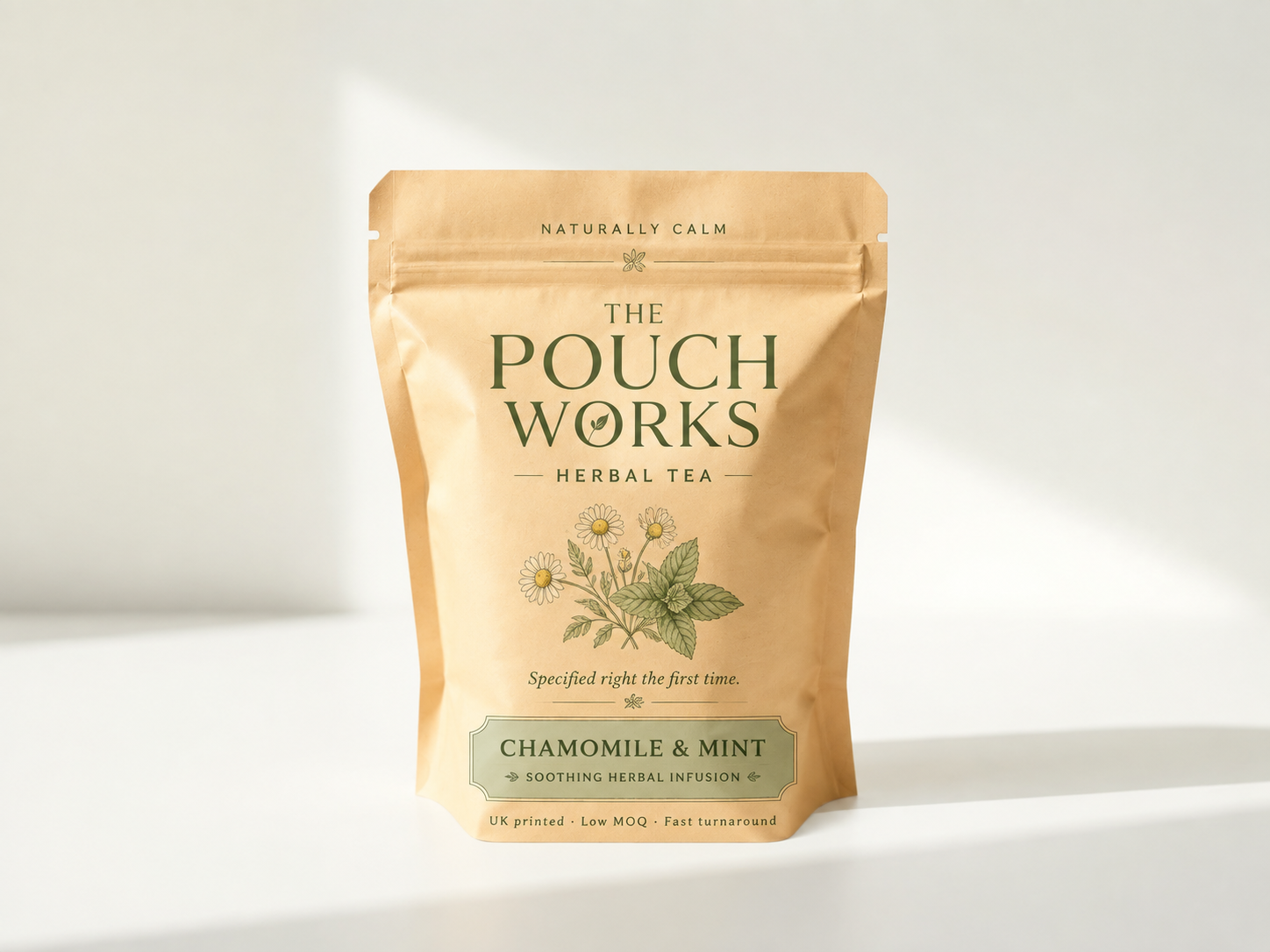
About tea bag pouches
Common sizes run 90 × 150mm for 50g of loose leaf up to 140 × 220mm for 250g, often with a narrow profile so several SKUs line up neatly on a shelf. A resealable zip is close to essential because tea is used over weeks rather than in one sitting. Bagged tea, pyramid bags and loose leaf all pack into the same format — the difference is fill volume, not construction.
Tea Bag Pouches at a glance
| Minimum order quantity | 100 units per design |
|---|---|
| Turnaround | 2–4 weeks from artwork approval |
| Quote turnaround | Within one business day |
| Print method | Digital print, printed in the United Kingdom |
| Typical spec | Aroma barrier · 120 × 200mm · Resealable zip · Loose leaf |
| Materials available | Kraft Paper Pouches, Metallic Foil Pouches, Matte White Pouches |
| Artwork format | Print-ready PDF or AI, CMYK, 3mm bleed |
Best for
- Loose leaf tea where aroma retention decides repeat purchase
- Pyramid and paper tea bags sold in counts of 15 to 100
- Herbal and botanical infusions that transfer scent easily
- Small-batch and seasonal blends with several SKUs per range
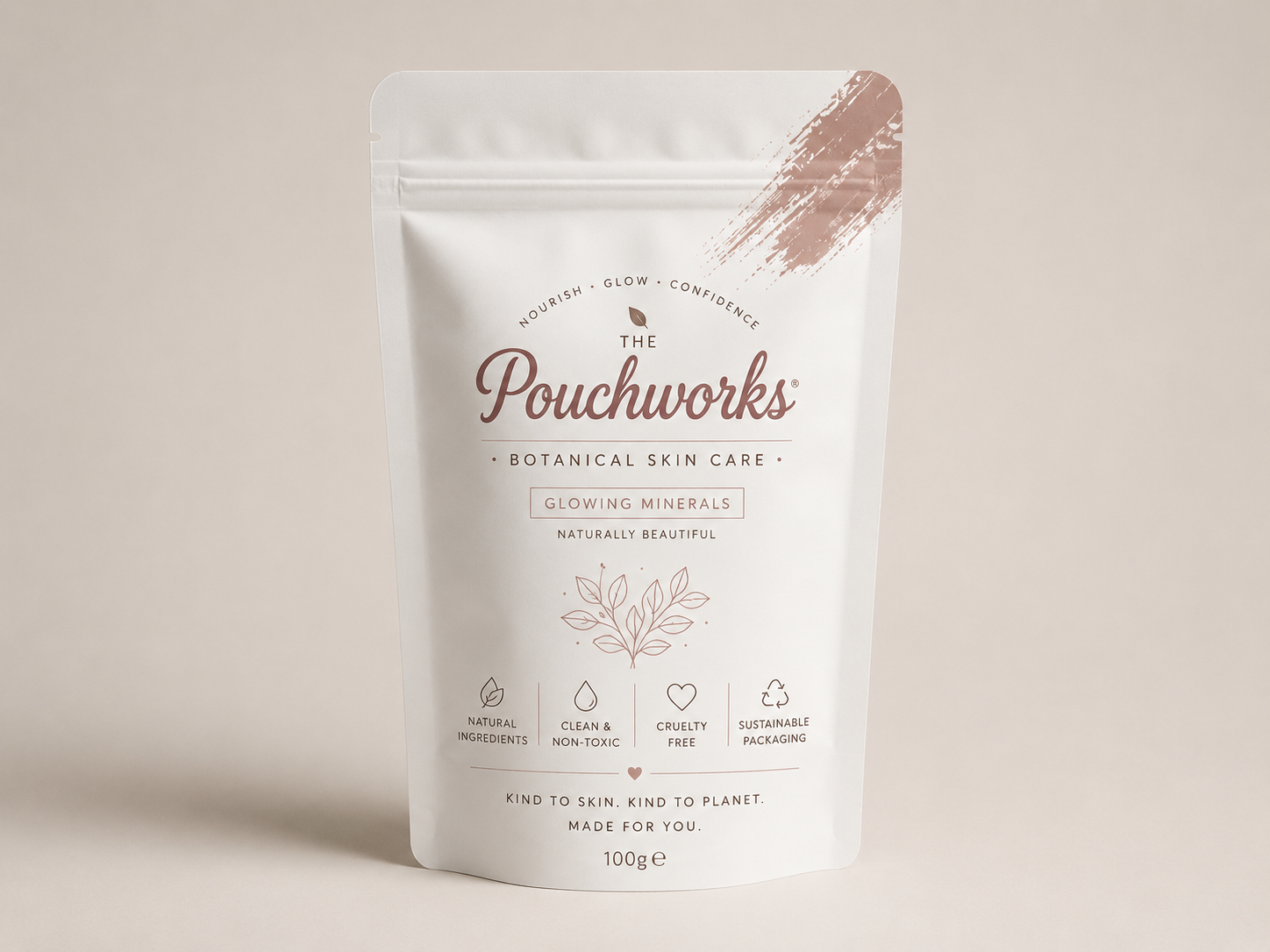
Materials that suit this format


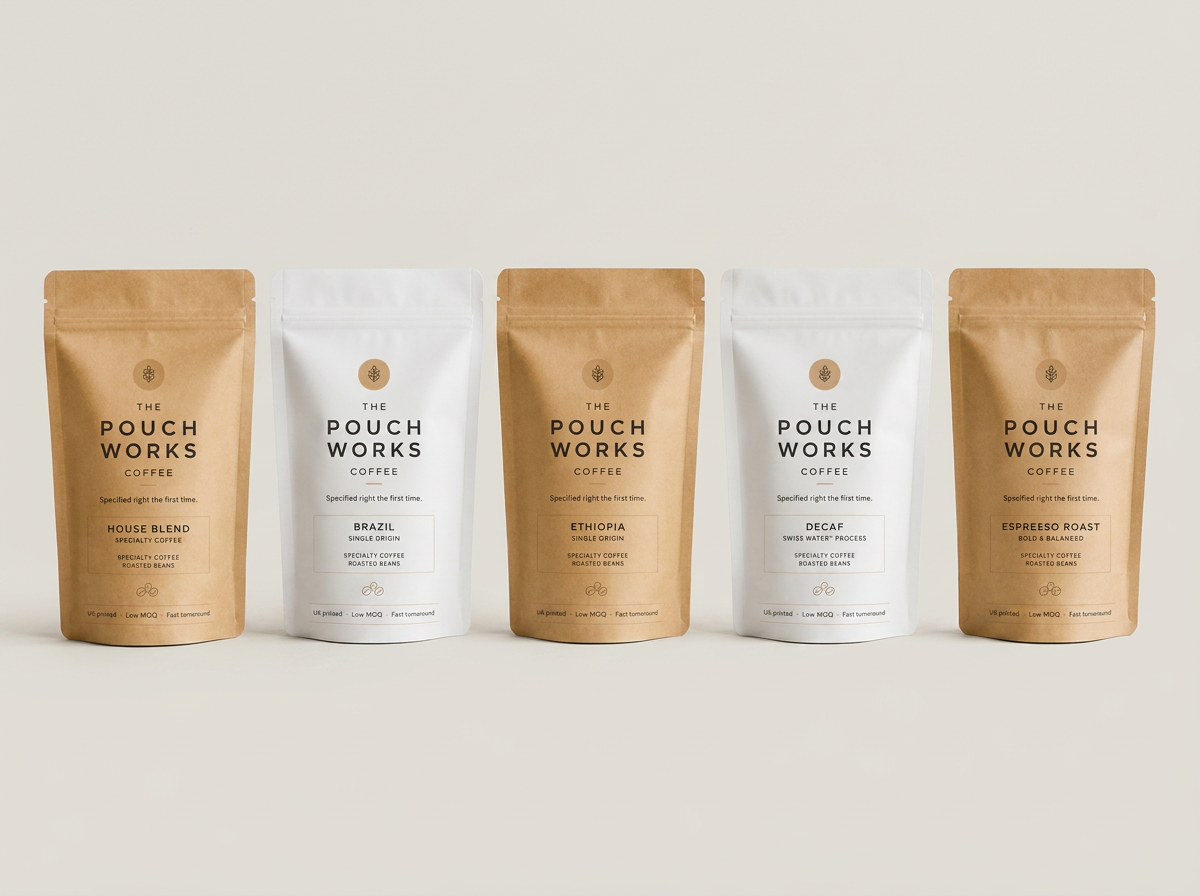
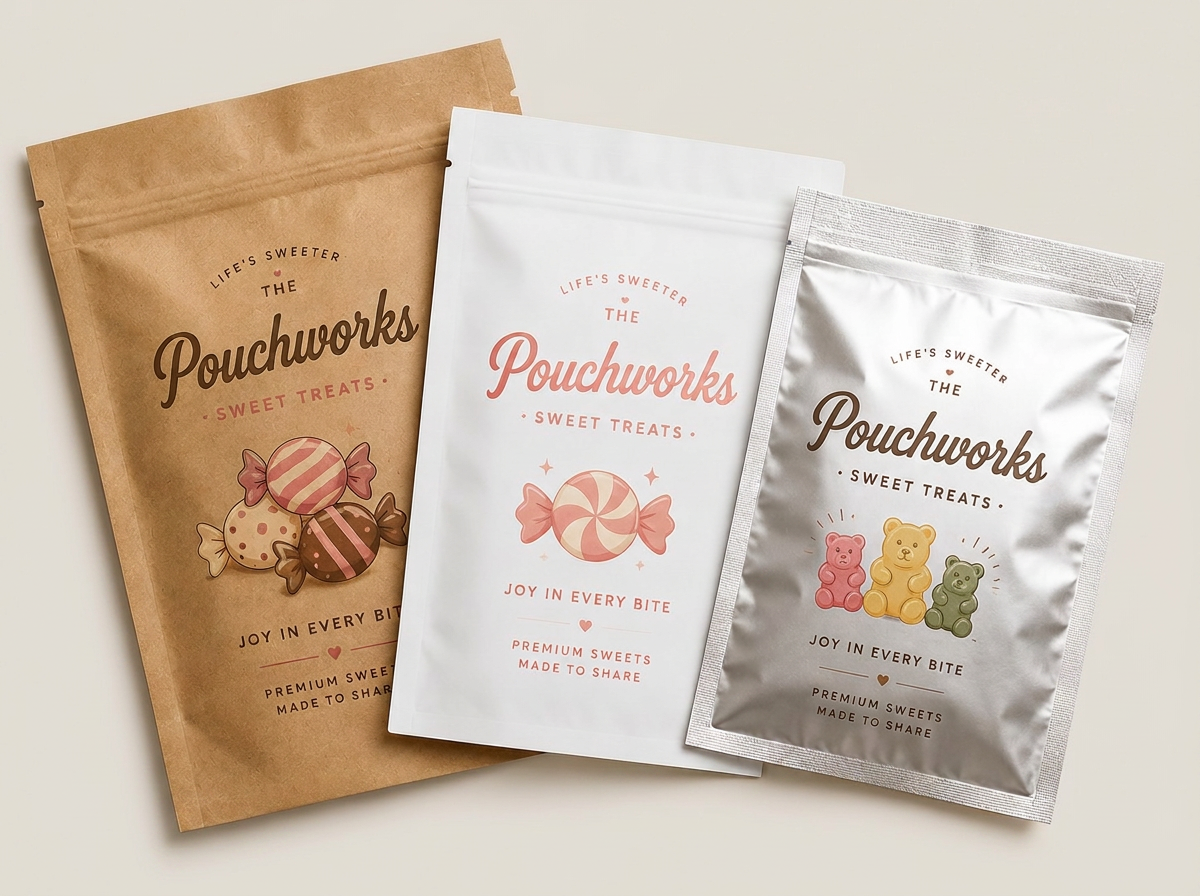
Who packs in this format
Related guides
Tea Bag Pouches — common questions
Do tea pouches need a valve?
No. Valves exist to release carbon dioxide from freshly roasted coffee, and tea does not off-gas. What tea needs instead is a strong aroma barrier and a reliable reseal.
Which material keeps tea freshest?
A metallised or foil laminate gives the best oxygen, light and aroma barrier, so it holds delicate green and white teas longest. Kraft with a barrier liner is a reasonable compromise if the natural look matters more than maximum shelf life.
Can I print several blends in one order?
Yes. Digital print means each design is a separate artwork file rather than a separate print plate, so running four blends of 250 units each is normally cheaper than gravure would be. The per-design minimum still applies to each blend.
What size pouch do I need for 100 tea bags?
Roughly 140 × 220mm with a 60mm gusset holds about 100 standard paper tea bags, depending on bag thickness. Pyramid bags take more room, so allow around 20% more volume.