Guide
Spouted Pouches for Liquids & Refills: The Complete UK Buyer's Guide
A spouted pouch is a flexible printed pack with a fitted spout and resealable cap, used for drinks, sauces, liquid refills, cosmetics and concentrates. Businesses choose them for controlled pouring, compact storage before filling and strong printed branding. Before ordering, you need to confirm the product's compatibility with the pouch material, the filling process and temperature, the spout and cap specification, and the minimum quantity for your chosen construction. This guide explains each decision and how to request an accurate UK quotation.
Quick answer: Are spouted pouches right for your product?
Spouted pouches suit most pourable or squeezable liquids, but the right answer depends on your formulation, filling process and how the customer will use the pack. The table below gives an honest first check for the five applications we are asked about most.
| Application | Suitability | Key technical consideration | When another format may be better |
|---|---|---|---|
| Juice, smoothies and cold drinks | Well suited for direct consumption and larger formats | Acidity, pulp particles and filling temperature | Single small portions may suit a sachet; carbonated drinks need specific review |
| Sauces, dressings and condiments | Well suited for squeezable and pourable products | Viscosity, oils, acidity and any hot-fill process | Very thick pastes may need a wide-mouth jar or different fitment |
| Hand soap and cleaning refills | Well suited as refill packaging for a reusable bottle | Surfactant and fragrance compatibility with film and seals | If the customer has no receiving bottle, a rigid primary pack may be needed |
| Shampoo, conditioner and cosmetics | Well suited for refills and travel formats | Formula compatibility, dispensing feel and cap choice | Products needing a pump or precise dosing may suit a bottle |
| Concentrates and specialist liquids | Often suitable where the construction is matched to the formula | Chemical compatibility, barrier and closure testing | Aggressive solvents or regulated products need individual assessment |
What is a spouted pouch?
A spouted pouch is a flexible stand-up pack with a rigid plastic spout sealed into the top seam or a corner, closed with a screw cap. The pouch body is a printed laminate chosen for the product inside; the spout and cap turn it into a pack that can be poured, squeezed and resealed.
It helps to separate three uses. Direct-consumption packaging is drunk or eaten straight from the pack, like a juice or smoothie pouch. Pourable packaging is dispensed into a glass, bowl or pan, like a sauce or cooking ingredient. Refill packaging is designed to top up a reusable bottle or dispenser, like hand soap or cleaning liquid. Each use places different demands on the spout size, cap and material.
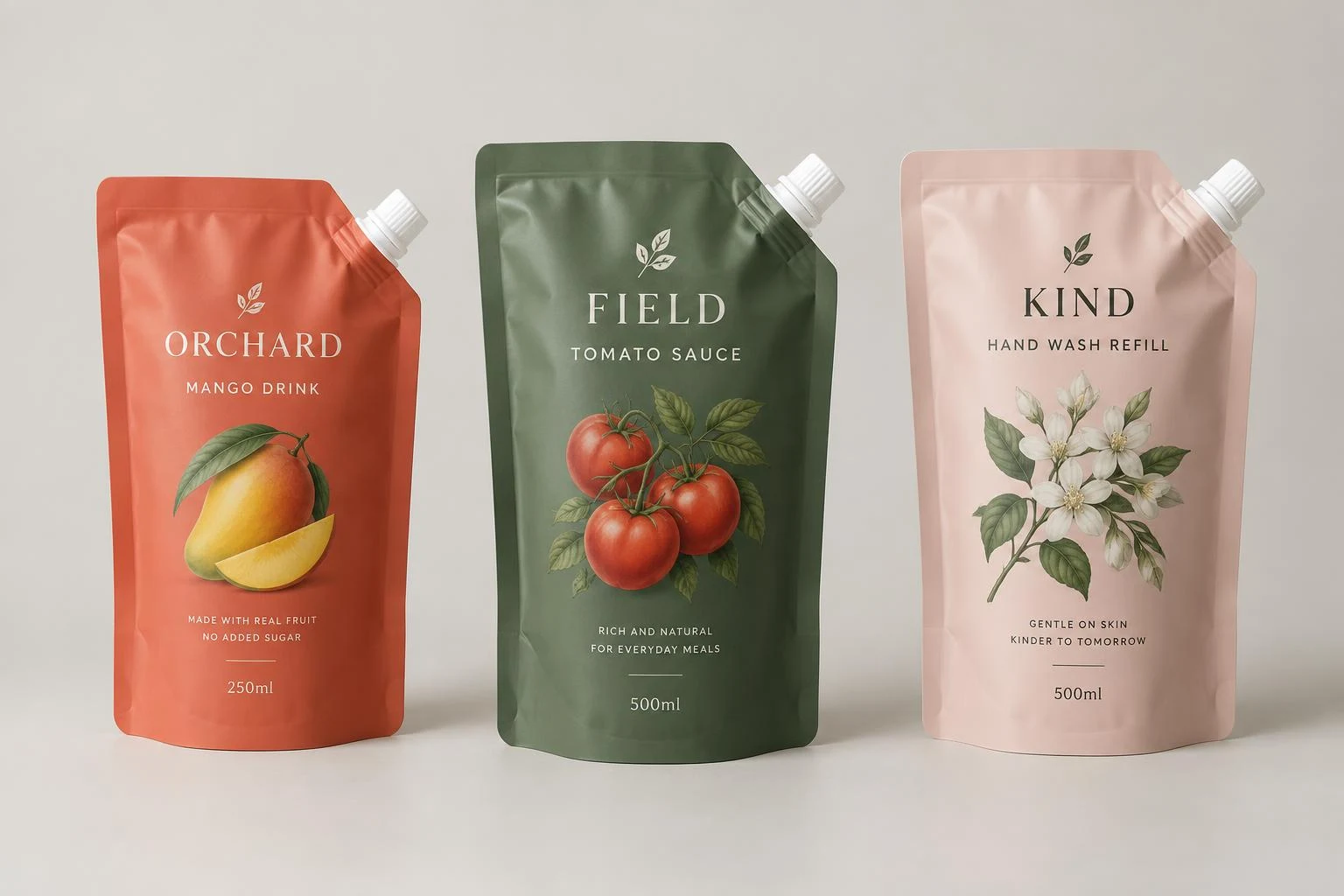
The Pouch Works supplies custom printed spouted pouches with specification support, so the pouch, fitment and filling process are considered together rather than as separate purchases.
Looking for custom printed spouted pouches?
Tell us what you're packaging and we'll help you work towards the right pouch specification.
Spouted pouches for juices, smoothies and cold brew
Drinks are the most established use for spouted pouches. The pack is light to transport, stands on a shelf when filled, and the cap lets the customer reclose it between servings. Smoothies and juices with pulp need an opening wide enough for particles to pass without blocking.
Check acidity and filling temperature first. Cold-fill juice, hot-fill juice and cold brew coffee are different specifications, and a laminate approved for one is not automatically approved for another. Carbonated products need specific review and are not suitable for every construction.
Tell us the drink, its fill volume and how it will be filled, and we will confirm whether a printed drink pouch is a practical route for your recipe.
Spouted pouches for sauces, dressings and condiments
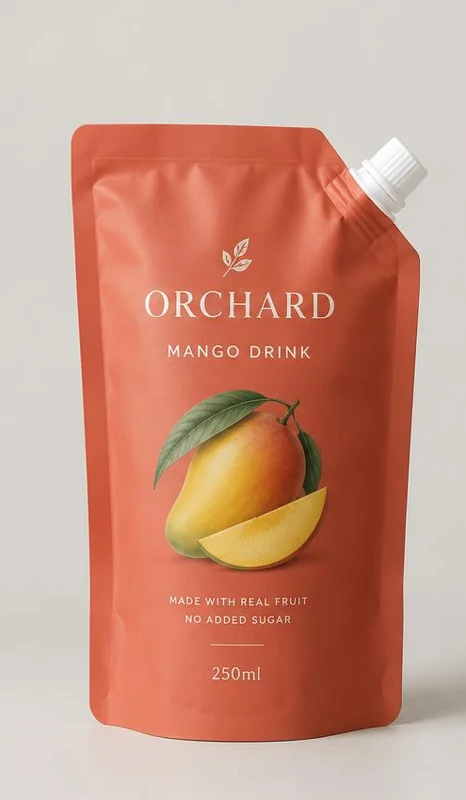
Sauces, dressings and condiments work well in spouted pouches because the customer can squeeze or pour exactly what they need and reclose the pack. The format suits everything from table sauces to cooking sauces and flavoured oils, provided the construction matches the recipe.
The important checks are viscosity, oil content, acidity and particle size. A thick mayonnaise behaves very differently from a vinaigrette, and a hot-filled tomato sauce places far more demand on the laminate and seals than a cold-filled dressing. The spout opening must suit both the product's flow and your filling equipment.
Brands packing condiments can also read our spices and condiments packaging page, then send the recipe details and filling process for a specification review.
Spouted pouches for hand soap and household cleaning refills
Refill pouches for hand soap and household cleaning liquids are one of the strongest commercial uses of the format. The customer keeps a durable bottle or dispenser and tops it up from a lighter, compact pouch that uses less material than a second rigid bottle.
Compatibility is the deciding factor. Surfactants, fragrances and cleaning agents can affect films, seals and fitments, so the exact formulation must be reviewed rather than assumed safe. The spout must also pour cleanly into the receiving bottle's opening without glugging or spills.
If you are developing a cleaning or soap refill range, tell us the formulation type, target fill volume and the bottle it will refill, and we will confirm a suitable construction before quoting.
Spouted pouches for shampoo, conditioner and cosmetics
Beauty and personal-care brands use spouted pouches for shampoo, conditioner, body wash and lotion refills, as well as travel and trial formats. The printed panels give full branding space, and the resealable cap suits bathroom use.
Dispensing feel matters here: a conditioner is far thicker than a micellar water, and the customer expects it to dispense without excessive squeezing. Cap style, opening size and pouch shape all influence that experience. Formula compatibility with the laminate must be confirmed, particularly for fragranced or oil-rich products.
Our cosmetics and skincare packaging page covers the wider range, and the refill section below explains how to specify a pouch that works with your existing bottles.
Spouted pouches for liquid concentrates and other specialist products
Concentrated products — squash concentrates, cleaning concentrates, liquid supplements and similar — can suit spouted pouches well because a small, light pack replaces a larger rigid bottle. The customer dilutes or doses the product at home.
Specialist liquids need the most careful review. High-strength formulas, alcohol content, essential oils and active ingredients can all affect the film, seals and closure. Where a product is regulated or hazardous, the closure and pack may need specific testing, and standard caps are not child-resistant.
Send the formulation details and intended use rather than a product category label; that is what allows a proper compatibility assessment before production is discussed.
How to choose the right spouted pouch for your business
A spouted pouch specification is a set of connected decisions. Changing one element — the volume, the film or the cap — often changes the others, so they are best settled together against the actual product and filling process.
Start with the target fill volume rather than pouch dimensions. Width and height alone do not determine usable capacity: gusset depth, seal margins, the fitment and headspace all play a part. State the volume in millilitres and let the dimensions follow.
Describe the product's viscosity at the temperature it will be dispensed. A thin liquid, a thick cream and a product with seeds or pulp each need a different spout opening. Spout placement — corner or centre — should follow how the customer pours or drinks, and how your filler loads the pouch.
Choose the cap for the job: screw caps with tamper-evident bands are common, and opening effort and resealing matter for repeat use. Materials must be matched to the barrier your product needs against oxygen, light and moisture, and to the filling process — cold fill, hot fill and any further processing such as pasteurisation each require specific approval of the complete construction.
Finally, consider storage, handling and shelf life as a filled pack, not an empty one. Every choice should be confirmed against your actual formulation and filling line; the spouted pouch sizes, caps and materials guide goes deeper on each variable.
Spouted pouches for product refills
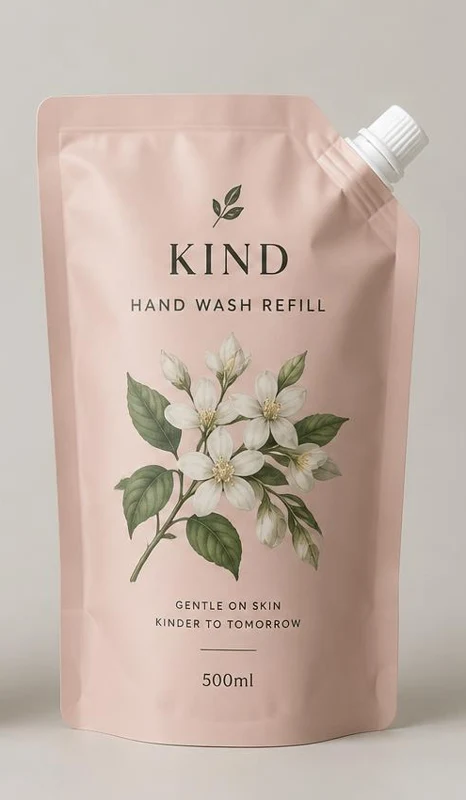
Refill ranges are where spouted pouches often make the strongest commercial case. Hand soap refills, household cleaning refills, beauty and personal-care refills and concentrated refill products all follow the same model: the customer keeps a durable primary container and buys lighter refills thereafter.
Design the refill around the receiving bottle. The spout should pour comfortably into its opening, the flow should be controllable, and the customer should be able to reseal the pouch cleanly if they do not empty it in one go. A corner spout often pours more naturally into a narrow bottle neck than a centre spout.
On-pack instructions matter more for refills than for primary packs. Tell the customer how to open, pour, reseal and store the pouch, and plan the artwork so those instructions stay readable once the pack is filled. The artwork setup guide explains how to keep important copy clear of seals and the fitment.
Be careful with environmental claims. A refill pouch typically uses less material than the rigid bottle it replaces, but that alone does not prove a lower environmental impact — the full life cycle, reuse behaviour and local recycling routes all matter. State what is verified for your specific pack rather than claiming flexible packaging is automatically greener.
Developing a liquid refill product?
From hand soap and cosmetics to sauces and drinks, tell us what you're filling and the quantities you need.
How much do custom printed spouted pouches cost in the UK?
There is no honest fixed price for a spouted pouch, because the cost is set by the specification. The main drivers are the order volume per design, the material construction, the printing and number of artwork designs, the pouch dimensions, the spout and cap specification, any finishing, and the overall production complexity.
Larger quantities generally reduce the cost per pouch, while specialist films, fitments and finishes add to it. Because spouted pouches combine a printed laminate with a separate fitment, like-for-like quotes must cover the same construction, cap and quantity per design to be comparable.
The reliable way to get a number is to submit your specification for a quotation. Our pricing guide explains the cost drivers in more detail, and your quote will confirm pricing and an indicative production timeline for your actual requirements.
What is the minimum order quantity for spouted pouches?
From 500 units per design for eligible formats; specialist specifications may require more.
Specification-dependent. Some mono-material spouted constructions require 5,000 units; we confirm the minimum before quoting.
In practice this means the correct minimum for your pouch depends on the construction and production route, and it is confirmed during quotation. It is not safe to assume every spouted pouch can be ordered in quantities of 500. Count quantities per artwork design, not across the whole order — three flavours are three separate production commitments.
The minimum order quantities guide explains how minimums are set and how to plan a multi-design launch around them.
UK spouted pouch sourcing — what businesses should consider
When comparing UK sourcing with importing, look at the complete picture: production communication, specification approval, lead times, quality requirements, delivery planning and the support available if something changes. A delivered date and a production-ready date are not the same thing, and material or fitment availability can move both.
First-time buyers benefit from a supplier who reviews the specification before quoting rather than pricing from a photograph. Approval stages — the dieline, the digital proof and any compatibility checks — should be clear before production is scheduled.
The Pouch Works is a UK-focused specialist sourcing and specification service. We help you define the right pouch, coordinate UK production options and manage the quotation and approval process; we do not claim to own production machinery or manufacture everything ourselves. For a balanced comparison with overseas routes, read UK spouted pouch manufacturers vs China.
What information do you need to request a spouted pouch quote?
You do not need every answer before enquiring — send what you know and mark the rest as uncertain. The more of the checklist below you can cover, the faster we can confirm a suitable construction and an accurate price.
- Product category — what you are filling, in plain terms
- Liquid formulation and consistency — thin, thick, particles, oils or active ingredients
- Target fill volume — in millilitres or litres
- Filling process and temperature — cold fill, hot fill or further processing
- Expected order quantity per design — and the number of artwork designs
- Preferred material — or ask for a recommendation
- Spout and cap requirements — position, opening size, tamper evidence
- Artwork availability — print-ready files, existing branding or a need for design help
- Delivery requirements — target date and delivery location
How spouted pouches compare with other packaging formats
No format wins in every situation. The comparison below covers the practical differences between spouted pouches, traditional bottles, sachets and ordinary stand-up pouches for liquid products; the spouted pouches vs bottles guide examines that particular choice in more depth.
| Format | Typical applications | Dispensing method | Reclosure | Filling considerations | Possible limitations |
|---|---|---|---|---|---|
| Spouted pouch | Drinks, sauces, refills, concentrates | Pouring or squeezing through the fitment | Screw cap, resealable | Filled through spout or open seal; line compatibility matters | Fitment adds cost; construction must match formula and process |
| Traditional bottle | Beverages, toiletries, household liquids | Cap, pump or specialised dispenser | Cap or pump, resealable | Established filling lines; rigid handling | Heavier to store and ship; higher material use per pack |
| Sachet | Single-use portions and samples | Torn open and squeezed | Not resealable | High-speed form-fill-seal lines | No reclosure; unsuitable for multi-use products |
| Stand-up pouch | Dry goods, powders, some liquids | Poured or scooped from the open top | Press-to-close zip where fitted | Standard pouch filling and sealing | No controlled pouring without a fitment |
Ready to source your spouted pouches?
Share your requirements and receive specification-led pricing and an indicative production timeline.
Related questions
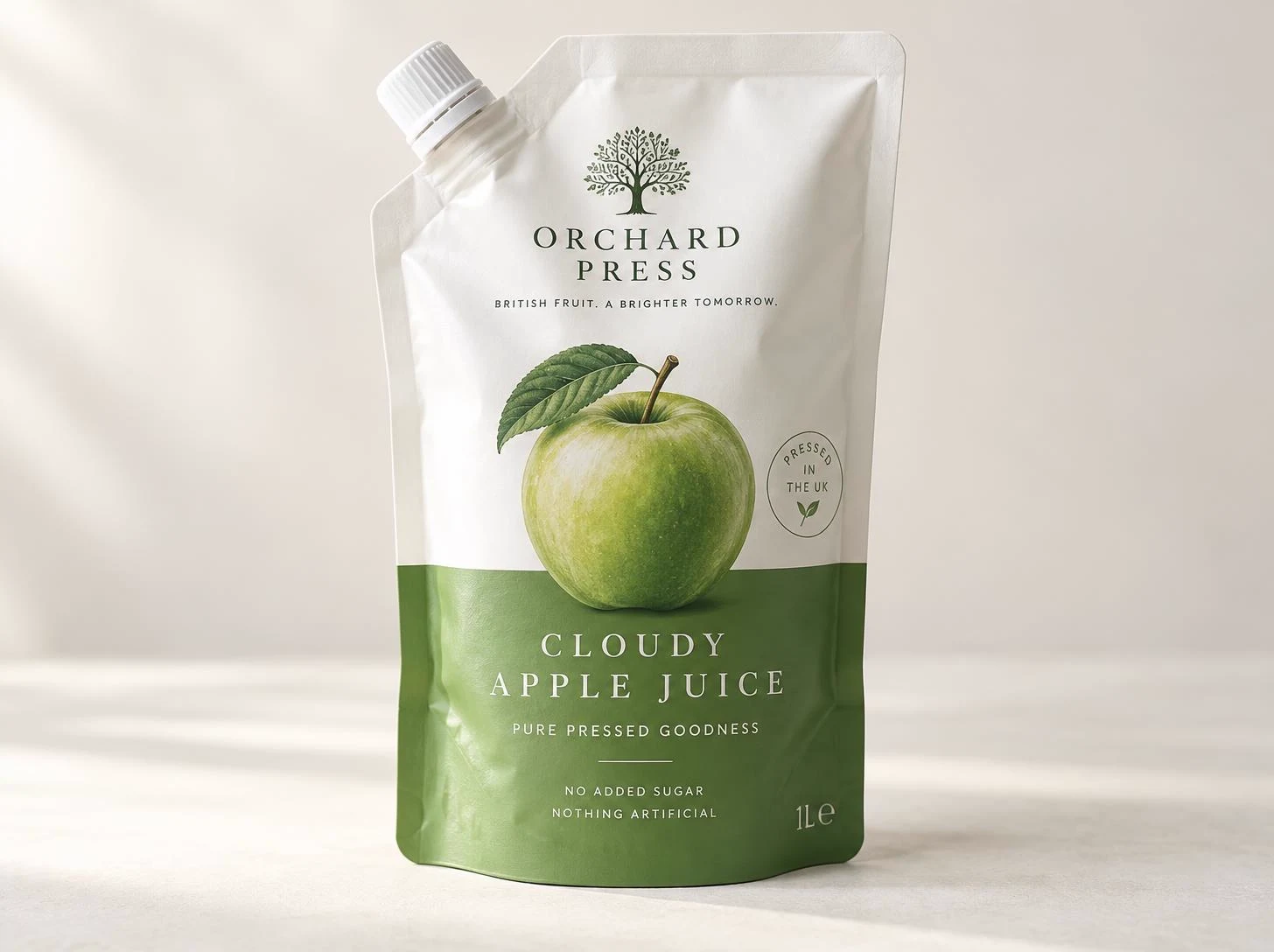
Custom Printed Spouted Pouches UK
Materials, fitments and specification-led quotation support.
Learn more →Spouted Pouch Sizes, Caps and Materials
Capacity, fitment and filling compatibility in detail.
Learn more →UK Spouted Pouch Manufacturers vs China
Compare sourcing routes on a matched specification.
Learn more →Frequently Asked Questions About Spouted Pouches
Where can I buy custom printed spouted pouches in the UK?
The Pouch Works supplies custom printed spouted pouches to UK businesses through a specification-led quotation process. You tell us what you are filling, the volume and the quantity per design, and we confirm a suitable construction, pricing and an indicative production timeline. Eligible standard printed formats start from 500 units per design; spouted minimums depend on the construction.
What are spouted pouches used for?
Spouted pouches package pourable or squeezable liquids: juices, smoothies, sauces, dressings, hand soap and cleaning refills, shampoo and cosmetics, and concentrated products. The fitted spout and screw cap allow controlled dispensing and resealing, which suits both direct consumption and refilling a reusable bottle.
Can I package sauces in spouted pouches?
Yes, provided the construction is matched to the recipe. Viscosity, oils, acidity, particle size and the filling temperature all affect the choice of laminate, seals and spout opening. A hot-filled sauce needs a specifically approved structure. Send the formulation and filling process and the specification can be confirmed before quoting.
Are spouted pouches suitable for juice and smoothies?
Yes — drinks are one of the most established uses. The pack is light, stands when filled and reseals between servings. Smoothies with pulp need an opening wide enough for particles, and the laminate must suit the product's acidity and filling temperature. Carbonated drinks require specific review and are not suitable for every construction.
Can I use spouted pouches for liquid soap refills?
Yes, liquid soap refills are a strong use for the format. The key checks are compatibility between the formulation — surfactants, fragrance and other ingredients — and the film, seals and fitment, plus a spout that pours cleanly into the receiving bottle. The exact formula should be reviewed rather than assumed compatible.
What is the minimum order quantity for printed spouted pouches?
Spouted pouch minimums are specification-dependent. Eligible standard printed pouch formats start from 500 units per design, but spouted constructions vary, and some mono-material constructions require 5,000 units. The correct minimum for your pouch is confirmed during quotation, so treat your desired quantity as an enquiry rather than a guaranteed minimum.
Can spouted pouches be custom branded?
Yes. The pouch panels are custom printed with your artwork in full colour, giving broad branding space on the front and back. Artwork should be prepared on the confirmed dieline, keeping essential text and barcodes clear of seals, gusset folds and the fitment area. Matte, gloss and other finishes depend on the chosen construction.
Are recyclable spouted pouches available?
Mono-material spouted constructions may be available where they suit the product and process, and some require a 5,000-unit minimum. Recyclability depends on the complete construction — film, spout and cap — and the collection route available to your customers. We confirm what is technically available for your specification rather than making a universal recyclability claim.
Can spouted pouches be hot filled?
Some constructions can, but hot filling places specific demands on the laminate, seals, spout and cap, and each element must be approved for the temperature and process involved. Cold fill, hot fill and pasteurisation are different specifications. State your filling temperature and process when enquiring so suitability can be confirmed.
How do I choose the correct spout size?
Start from the product's viscosity at dispensing temperature and how the customer will use the pack. Thin liquids, thick creams and products with particles need different opening sizes, and the spout must also suit your filling equipment. Corner spouts often pour more easily into bottles; centre spouts can suit direct squeezing. We confirm the fitment as part of the specification review.
How long does spouted pouch production take?
Standard production is typically 2–4 weeks from artwork approval. Specialist constructions, material or fitment availability and current capacity can change the schedule, and time should be allowed before that window for specification decisions and artwork revisions. Your quotation confirms the indicative timing for your actual requirements.
Can a small UK business order custom spouted pouches?
Yes. Eligible standard printed formats start from 500 units per design, which suits many small brands, although spouted minimums depend on the construction and some require more. You do not need a technical specification to start: send the product, fill volume and desired quantity, and the specification is reviewed with you before quoting.
Still have questions? Email hello@thepouchworks.com and we'll get back to you within one business day.